Webinar on Horizon Europe: Review of the Horizon Europe work-programmes 2026-2027

Shares

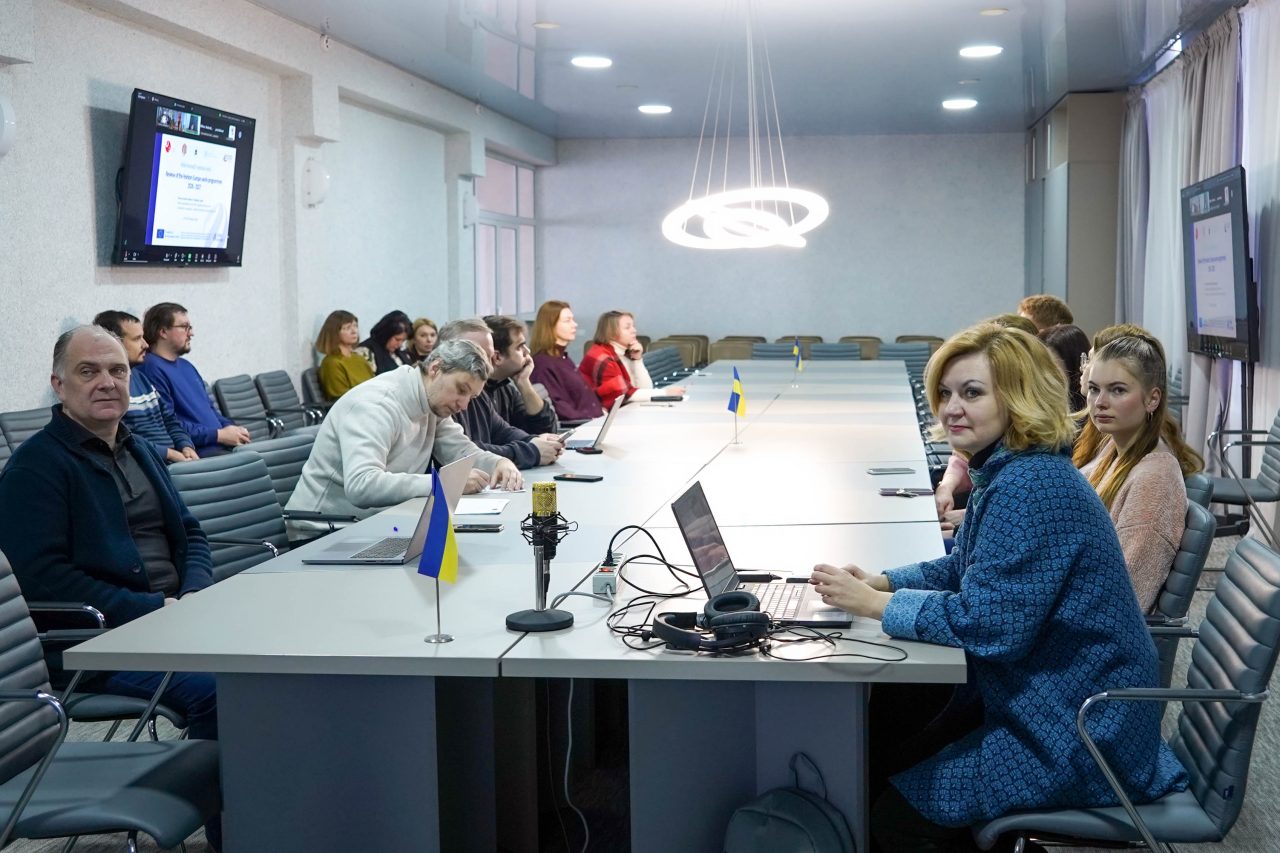
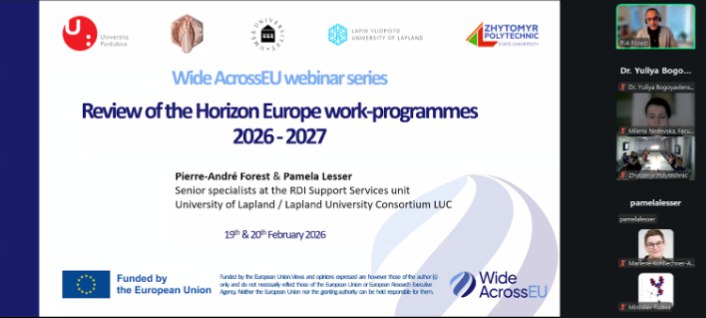
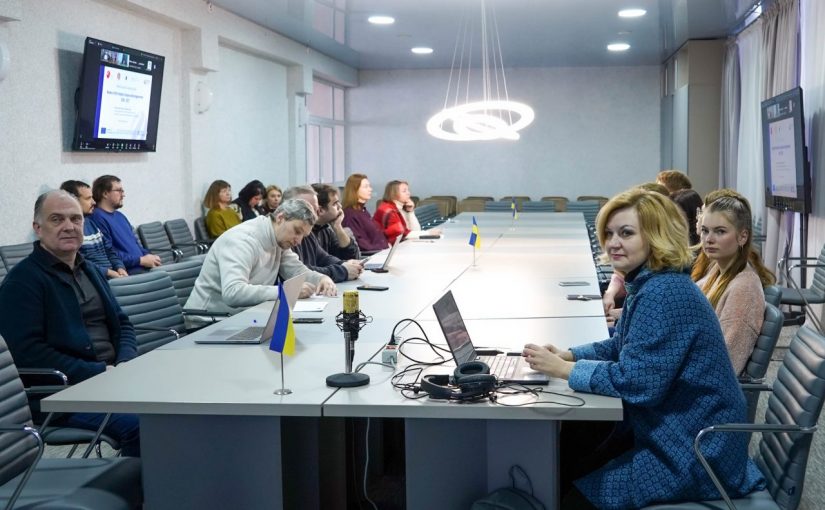
The international webinar “Review of the Horizon Europe work-programmes 2026-2027” within the framework of the WIDE AcrossEU project was hosted by the RDI Support Services unit of the University of Lapland (Finland) on the 19-20th of February, 2026. The event brought together researchers, research support staff, representatives of international offices, management and administrative staff from higher education institutions seeking to enhance the performance of their participation in European Union funding programmes.

The webinar focused on the main aspects of the updated work programmes of Horizon Europe for 2026-2027, as well as on practical cases of proposal preparation within the new funding conditions. Experts from the University of Lapland provided a detailed overview of the logic of the new work programmes and their alignment with key EU policy priorities. It was mentioned that in 2026-2027, the programme will be even more strongly oriented towards achieving measurable societal and economic impact, supporting the green and digital transitions, and strengthening the competitiveness of European research and innovation.

Participants received a structured overview of changes across clusters, horizontal priorities, and funding mechanisms. Particular attention was paid to updated approaches to defining call topics, strengthened requirements for the “Impact” section, integration of open science policies and research data management, interdisciplinarity and cross-sectoral collaboration, and as the role of institutional support in improving proposal quality.

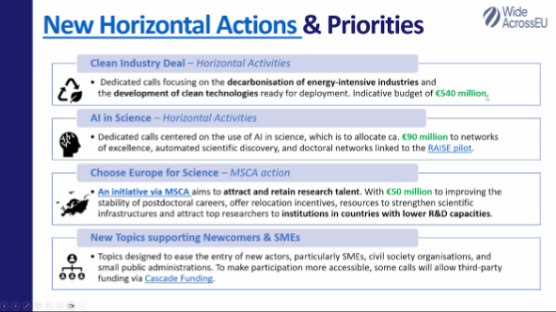
The presentation of new horizontal initiatives aimed at supporting transformative processes in Europe was made. Speakers outlined directions for future simplification measures, including broader use of lump-sum funding, reduction of administrative burden, optimisation of grant types, preservation of the consortium-based approach, and new opportunities to integrate artificial intelligence into research processes within the AI in Science framework. These changes aim to make participation more accessible, while improving the efficiency of EU funding. For participants from widening countries, information on the development of the WIDERA programme was very relevant. 

The webinar was practical-oriented: participants received recommendations on developing competitive project ideas aligned with expected call outcomes, clearly formulating objectives and impact indicators, structuring work packages, justifying budgets, demonstrating European added value, and building effective consortium management models. During the Q&A session, attendees received clarifications on financial mechanisms, project evaluation procedures, the specifics of lump-sum grants, and the involvement of new partners.

Participation in such international events is an important component of strengthening universities’ institutional capacity in international project activities. The knowledge gained will contribute to improving internal research support procedures, enhancing the quality of grant proposals, and increasing participation in Horizon Europe calls. Systematic engagement in the initiatives of the WIDE AcrossEU project opens new opportunities to expand partnerships, integrate into the European Research Area, and strengthen universities’ positions as active participants in international scientific cooperation

Вебінар Horizon Europe “Review of the Horizon Europe work-programmes 2026-2027”

19-20 лютого 2026 року науково-педагогічні працівники, представники адміністрації, офісу фандрейзингу та міжнародного відділу Житомирської політехніки долучилися до міжнародного вебінару “Review of the Horizon Europe Work Programmes 2026-2027”, організованого в межах проєкту WIDE AcrossEU та проведеного командою підрозділу RDI Support Services Unit University of Lapland (Фінляндія).

Захід був присвячений комплексному аналізу оновлених робочих програм Horizon Europe на 2026–2027 роки, а також практичним аспектам підготовки проєктних заявок у нових умовах. Вебінар об’єднав дослідників, грантових менеджерів, представників структур підтримки науки та міжнародних відділів закладів вищої освіти Чехії, Північної Македонії, України, які прагнуть підвищити результативність участі у конкурсах Європейського Союзу.

Під час заходу експерти детально представили логіку формування нових робочих програм та їх узгодженість із ключовими політичними пріоритетами ЄС. Учасники отримали структурований огляд змін у кластерах, напрямах та механізмах фінансування. Особливу увагу було приділено: оновленим підходам до формування конкурсних тем, інтеграції політики відкритої науки, міждисциплінарності. Експерти надали практичні поради щодо підготовки заявок. Було представлено статистичні дані щодо рівня успішності, типові причини відхилення заявок та приклади ефективних стратегій посилення інституційної спроможності. Надзвичайно корисною стала сесія запитань і відповідей, під час якої учасники змогли отримати роз’яснення щодо фінансування, оцінювання проєктів, та особливостей участі партнерів. Спікери підкреслили, що успішність участі у конкурсах дедалі більше залежить не лише від наукової ідеї, а й від чіткої стратегії реалізації та ефективної координації дій партнерів у консорціумі.

Участь у подібних міжнародних заходах є важливою складовою розвитку інституційної спроможності Житомирської політехніки у сфері міжнародної проєктної діяльності. Отримана інформація сприятиме вдосконаленню внутрішніх процедур підтримки науковців, підвищенню якості підготовки грантових заявок та активізації участі у міжнарожних конкурсах рівня Horizon Europe.

Системне залучення до ініціатив проєкту WIDE AcrossEU відкриває нові можливості для розширення партнерських зв’язків, інтеграції до Європейського дослідницького простору та зміцнення позицій університету як активного учасника міжнародної наукової співпраці. 

https://www.linkedin.com/company/wide-acrosseu/posts/?feedView=all

Funded by the European Union. Views and opinions expressed are however those of the author(s) only and do not necessarily reflect those of the European Union or European Research Executive Agency. Neither the European Union nor the granting authority can be held responsible for them. / Фінансується Європейським Союзом. Висловлені погляди та думки однак належать лише автору (авторам) і не обов’язково відображають погляди Європейського Союзу або Європейської дослідницької виконавчої агенції. Ані Європейський Союз, ані орган, що надає гранти, не можуть нести за них відповідальність.

#WIDE_AcrossEU #Horizon_Europe #EUResearch #EU

Залишити відповідь

Ваша e-mail адреса не оприлюднюватиметься. Обов’язкові поля позначені *

/** * */